


In a recent session on leadership communication, Regional Director Jeff Sheard explored the art and science of influencing others, emphasising that everyone is a leader in their own way. Whether shaping opinions or making an impression on stakeholders, effective communication is essential in both business and life.
Jeff illustrated this with his own career journey, detailing his progression from aircraft electrician to IT professional, and eventually into sales and account management in the media and entertainment industry. He shared a defining moment when his persuasive communication skills enabled him to successfully pitch a team leadership proposal to the executive board, underscoring the real-world impact of compelling leadership.
Watch the full presentation below or read on to explore Jeff’s insights on effective leadership communication.
First Impressions Matter
“How can you not be ignored when you've got an important point to make or a position to take, endorsement to get?”
“How do you not get ignored when you’ve got an important point to make or a position to take, endorsement to get?”
Jeff discussed research on first impressions, explaining how they are shaped by heuristics, stereotypes, and biases. He emphasised the importance of body language, physical appearance, and organisational role in creating a strong initial impact.
“The way we see each other can be irrational, incomplete, inflexible, and largely automatic,” he noted, quoting author and social psychologist Dr Heidi Grant to highlight the subconscious nature of first impressions and their lasting influence.
Connecting Through Communication
While experts often prioritise competence over warmth, Jeff explains that research suggests the opposite: it’s more effective to prioritise warmth before competence.
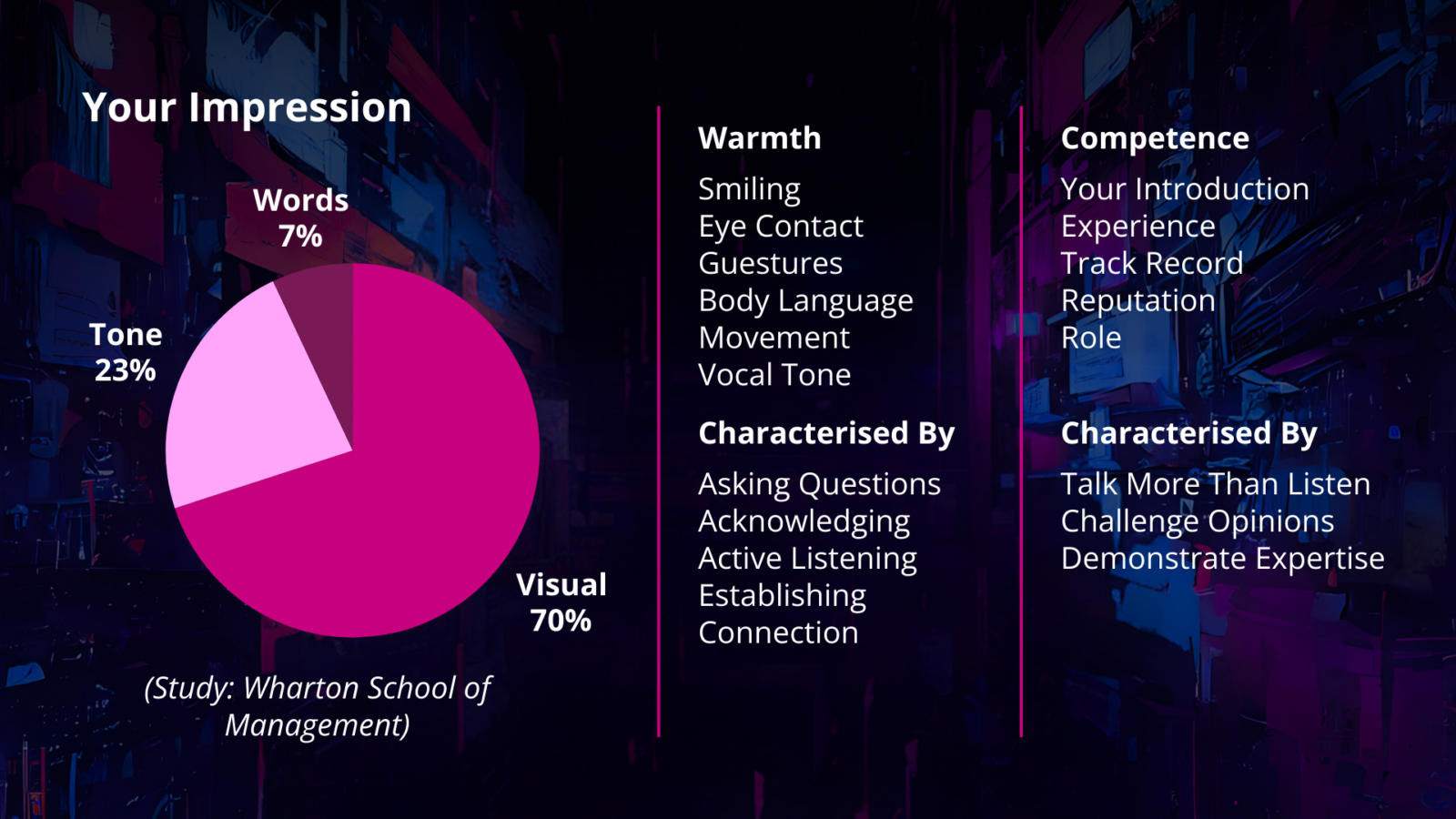
A study by the Wharton School of Management reveals that first impressions are primarily shaped by visual cues, followed by tone, and then words. People tend to trust what they see over what they hear, and any misalignment between the two leads to confusion or disbelief.
These findings have been summarised in a table, outlining the attributes that influence perceptions of warmth and competence. Being aware of these often unconscious factors can help bridge the gap between individuals, fostering a sense of comfort and connection.
Commanding Attention
Jeff takes us back to ancient Greece, where the Greeks believed that all public addresses should address ethos, logos, and pathos.
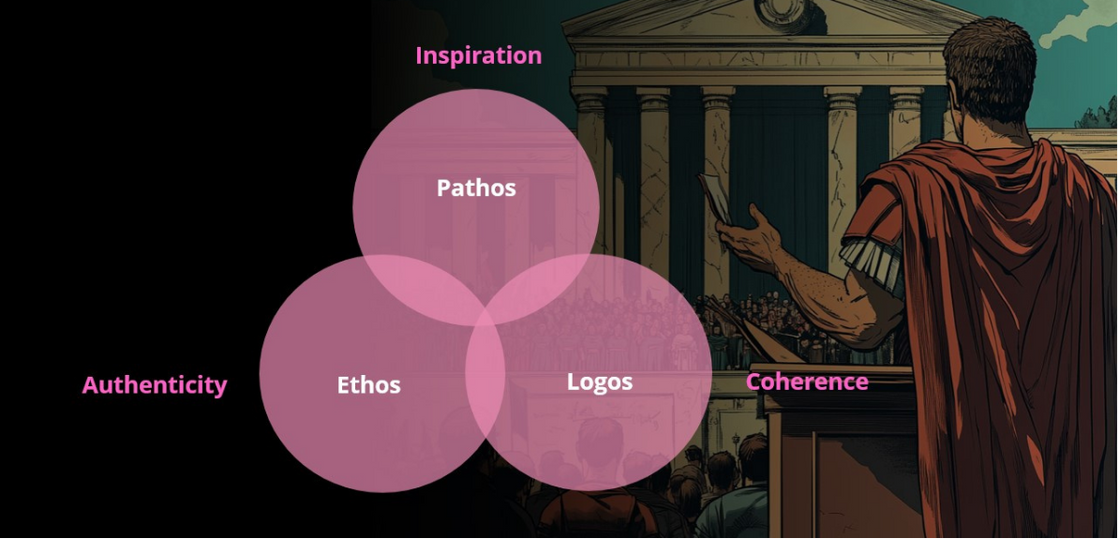
He then presents the essential skills required to command attention:
Preparation
Coherence
Delivery
Relevance
Who am I engaging?
What am I conveying?
How is it best delivered?
Structure and flow
Content
Supporting material
Clarity
Confidence
Impact
Engagement
Their motivators
Their priorities
Their history
Preparation
Who am I engaging?
What am I conveying?
How is it best delivered?
Coherence
Structure and flow
Content
Supporting material
Delivery
Clarity
Confidence
Impact
Engagement
Relevance
Their motivators
Their priorities
Their history
Compel… to Take Committed Action
People do things for 2 reasons: the right reason and the real reason
JP Morgan
The reasons for action could be distilled into three categories according to Jeff: emotional, political, and rational. He draws a line between emotional and political reasons as the “real” motivators, while rational reasons are the “right” ones. Research suggests that decisions are more driven by emotional motivators than rational ones. While this isn’t an absolute rule, it highlights the dominant role emotions play in decision-making, without dismissing the importance of rational motivations.
Rational
Emotional
Political
Price
Features
Functions
Delivery
Timeframe
Investment
Ego
Prestige
Fear
Jealousy
Like, love, lust
Value
Position
Role, title
Race, colour, creed
Precedent
Turf wars
Ambition
Rational
Price
Features
Functions
Delivery
Timeframe
Investment
Emotional
Ego
Prestige
Fear
Jealousy
Like, love, lust
Value
Political
Position
Role, title
Race, colour, creed
Precedent
Turf wars
Ambition
Compel...With Persuasive Content
Jeff outlines three key categories for persuasive communication: features, evidence, and benefits. Features alone don’t engage; however, adding a layer of benefits helps convince the audience. The crucial question is, “What’s in it for the listener?” What truly seals the deal is evidence. He suggests making communication, wherever possible, evidence-rich to strengthen the message.
Features
Evidence
Benefits
Descriptive
Does not differentiate
Does not persuade
Facts, statistics
Case study
Expert opinion, testimonial
Answers the question (e.g. removes risk, reduces price, increases revenue)
Features
Descriptive
Does not differentiate
Does not persuade
Evidence
Facts, statistics
Case study
Expert opinion, testimonial
Benefits
Answers the question (e.g. removes risk, reduces price, increases revenue)
Key Takeaways
To Connect
- Consciously manage your first impression
- Prioritise warmth before competence
- Ask questions, listen actively, use full eye contact
To Command
- Aim for authenticity, coherence and relevance
- Address the who, what, and how – the three whys
- Structure ideas clearly and logically, delivering with impact at key points
To Compel
- Understand emotional and political drivers, then rationalise them
- Turn features into benefits
- Make evidence-rich statements