


The acceleration of digital transformation has fundamentally altered the security landscape for organisations across all sectors. As C-suite leaders navigate this evolving terrain, the challenge isn’t whether to embrace emerging technologies, but rather how to do so whilst maintaining stringent protection of sensitive data and intellectual property.
The AI Revolution: Opportunity Meets Governance Challenge
Artificial intelligence is transforming business operations across industries, from document analysis to automated decision-making. However, if your organisation’s first instinct is to ask “How do we stop this?”, you’re approaching the challenge from the wrong direction. History has shown us this pattern before with cloud adoption—organisations that positioned themselves as blockers rather than enablers ultimately fell behind their competitors.
The reality is straightforward: AI delivers genuine value, and your workforce will find ways to utilise it with or without formal IT support. The critical question for leadership isn’t whether to permit AI usage, but rather “How do we enable safe AI adoption whilst protecting our organisation’s confidential information?”
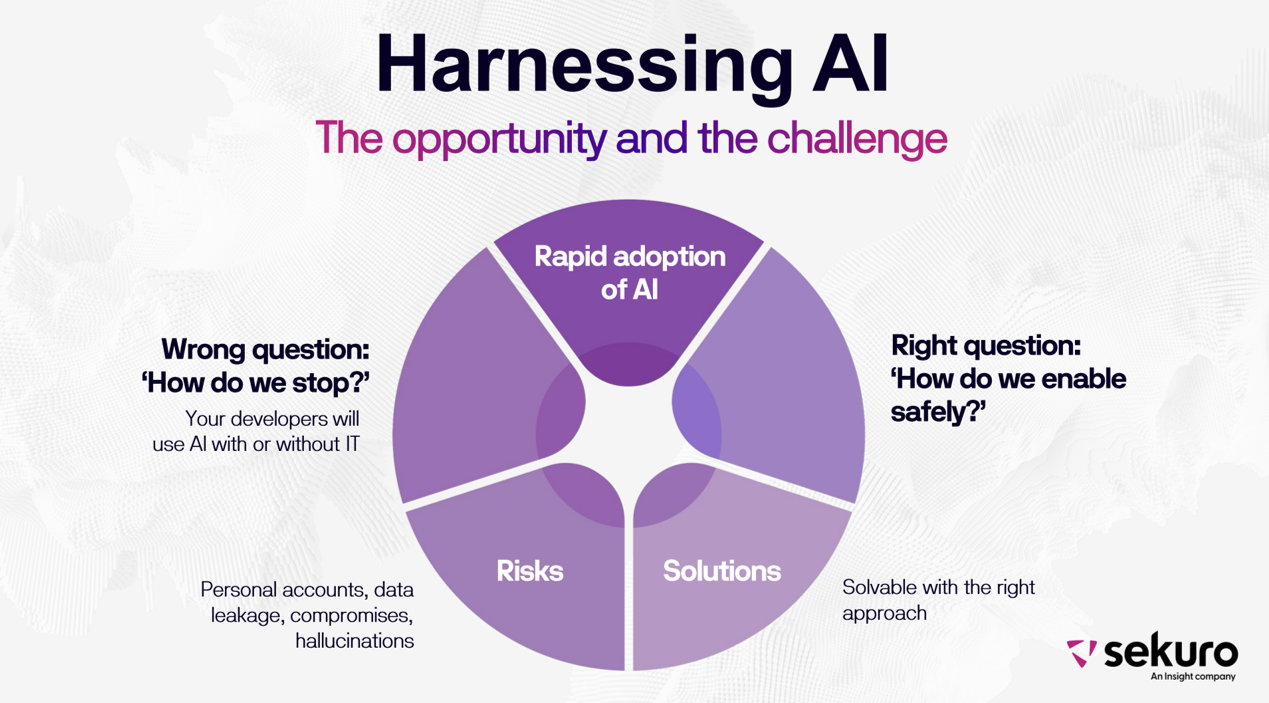
The risks associated with AI adoption are entirely manageable with appropriate frameworks. Larger enterprises can deploy private AI models through platforms such as AWS Bedrock or Azure OpenAI, ensuring sensitive data never leaves their direct control. Smaller organisations can sanction specific third-party AI tools that incorporate enterprise-grade controls, including single sign-on authentication, contextual access policies, comprehensive audit logging, and data loss prevention capabilities.
An emerging challenge is that AI is democratising software development. Business users are now building applications without traditional coding expertise, which presents tremendous innovation value but introduces new security considerations. Even organisations that have never maintained development teams now require DevSecOps frameworks and appropriate guardrails.
The Dissolved Perimeter: Rethinking Data Protection
The traditional security approach – establishing strong perimeters around corporate networks – no longer provides adequate protection. Your workforce operates from diverse locations, organisational data resides across multiple platforms, and stakeholders expect seamless accessibility regardless of physical location. The COVID-19 pandemic accelerated this transformation, and there is no returning to previous models.
Organisations face heightened obligations including duty of confidentiality, regulatory scrutiny across multiple jurisdictions, privacy legislation compliance, and substantial reputational risk. A single significant breach can irreparably damage stakeholder trust and organisational credibility. The perimeter has dissolved, and security strategy must adapt accordingly.
Four Leadership Priorities for Secure Innovation
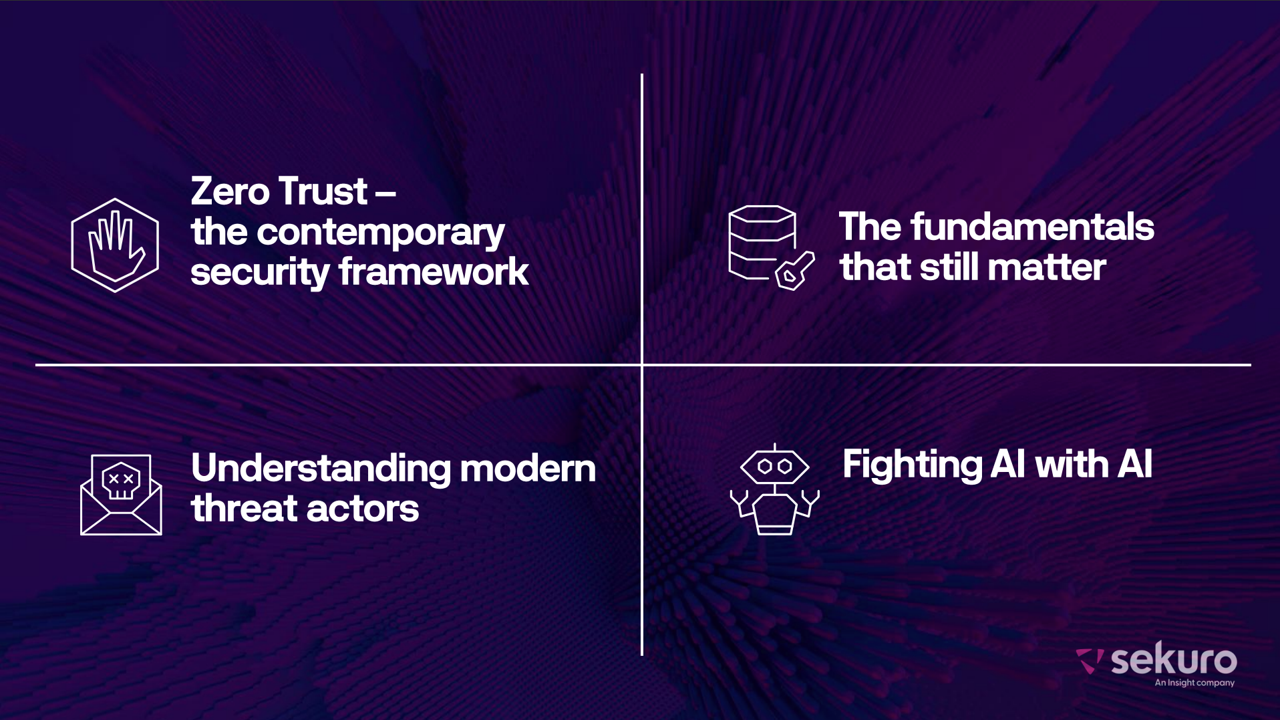
As a C-suite leader, you can drive immediate progress by evolving alongside AI adoption, mastering the essentials of identity management and network segmentation, embracing Zero Trust as essential architecture, and prioritising secure software development frameworks.
1. Zero Trust: The Contemporary Security Framework
Zero Trust represents a fundamental shift in how organisations approach security architecture. The foundational principle is straightforward: assume nothing except that “anything could be compromised at any time.” This philosophy emphasises contextual trust with minimal assumptions, gathering substantially more context about user behaviour patterns, threat signals, and assurance levels before making trust decisions.

Through enhanced context-awareness, organisations can create more flexible cybersecurity programmes that say “yes” more frequently than they say “no” -reducing friction for legitimate users whilst encouraging digital innovation. This approach enables security to become a business enabler rather than an obstacle.
2. The Fundamentals That Still Matter
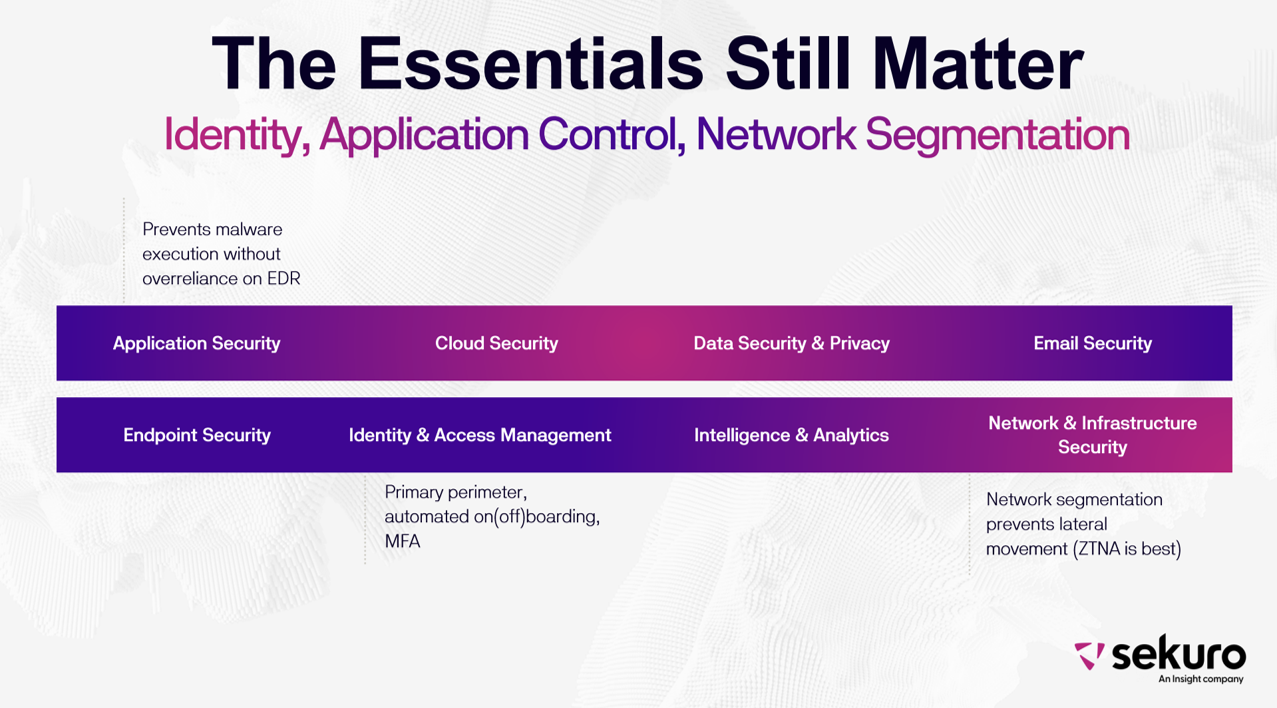
Modern technology has made essential controls that were once very difficult to implement, suddenly quite achievable for organisations of all sizes. In a world without network perimeters, identity becomes your first and most critical line of defence, encompassing automated provisioning, privileged access management, phishing-resistant multi-factor authentication, and regular access reviews. Application control prevents unauthorised software execution, stopping malware even if malicious files are downloaded and avoids the assumption that EDR will stop all malicious software execution. Network segmentation prevents attackers from moving laterally across your environment, with modern approaches combining Secure Access Service Edge architecture with host-based firewalls delivering effective protection that follows endpoints regardless of location. Implementing these fundamental controls effectively prevents the majority of common attacks.
3. Understanding Modern Threat Actors
Organisations across all sectors hold extraordinarily valuable information – merger and acquisition details, intellectual property, strategic plans, and customer data. Attackers increasingly view organisations as pathways to their clients or partners, making them strategic entry points to high-value targets.
Modern attack sophistication has escalated dramatically. Threat actors are leveraging AI to craft perfect phishing campaigns with contextually relevant content at unprecedented scale. The traditional security awareness approach of “trust your instincts” no longer provides adequate protection when attacks are indistinguishable from legitimate communications.
4. Modern Defence: Fighting AI with AI
Traditional security controls are increasingly being bypassed by sophisticated attackers. Forward-thinking organisations are deploying AI-enhanced security capabilities to counter AI-powered attacks. AI-enhanced email security analyses communication patterns, flagging anomalies that indicate compromised accounts or sophisticated impersonation attempts. AI systems automate alert correlation and filter false positives – capabilities particularly valuable for organisations with limited security resources.
Modern defence strategy must assume breach as a starting point, requiring multiple overlapping controls, continuous monitoring, contextual decision-making, and automation to provide the speed necessary to counter modern threats. A critical mindset shift for leadership: security and productivity are not opposing forces. Modern security architecture enables seamless work experiences whilst maintaining comprehensive protection.
The Path Forward
To assess your organisation’s readiness, consider whether your security strategy articulates what “good” looks like with measurable targets, whether you’ve made technology investments that follow your data beyond traditional perimeters, whether you possess detailed understanding of where data is being transmitted, and whether you’ve developed a clear answer for how your organisation will safely leverage AI capabilities.
The security landscape has transformed fundamentally. C-suite leaders who position security as a business enabler rather than a constraint will drive competitive advantage through safe innovation. The organisations that thrive will be those that embrace emerging technologies whilst implementing resilient, modern security methodologies that protect what matters most.